

Childhood and adolescent obesity remains one of the most pressing public health challenges across Europe, with lasting physical, metabolic, and psychosocial consequences.


As part of a new educational initiative, the European Academy of Paediatrics (EAP), in collaboration with the European Childhood Obesity Group (ECOG), the European Paediatric Obesity Research Network (eprObese / EPROBESE), and the European Confederation of Primary Care Paediatricians (ECPCP), is launching a three-part webinar series supporting paediatricians across all levels of care.


The series follows a structured pathway — from understanding the problem, to practical management, and finally to the implementation of evidence-based tools in clinical practice.

Join our Three-Part Obesity Webinar Series

Keep an eye on our website for details!

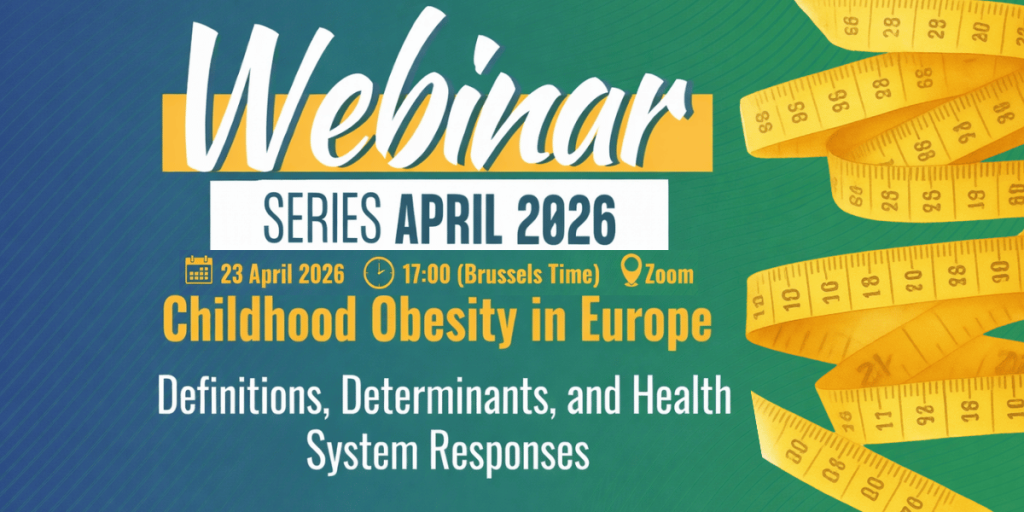
23 April 2026 @ 17:00 CET

Part 1

Understanding the problem and health system context

Part 1

June 2026 (tbc)

Part 2

Primary care – identification and management

Part 2

September 2026 (tbc)

Part 3

Practical tools and treatment implementation

Part 3

Topics

Webinar 1: Understanding the Problem and Health System Context


This first session provides a focused European perspective on childhood obesity, bringing together epidemiology, risk factors, and clinical practice within a broader health system context.


The programme features three expert-led sessions:


  • Epidemiology and trends across Europe
  • Risk factors and key determinants
  • Clinical management and care pathways

Together, these perspectives highlight childhood obesity as both a chronic condition and a system-level challenge requiring coordinated care.

🧠Learn. Connect. Inspire. 👶 Together, we protect every child’s right to a healthy future!

Meet the Speakers:

Prof. Wolfgang Ahrens

Professor of Epidemiological Methods at the University of Bremen and Head of Research at BIPS, with a focus on lifestyle-related diseases and prevention. He leads major European studies on childhood obesity, including the IDEFICS and I.Family projects.

Prof. Daniel Weghuber

Head of Pediatrics at University Hospital Salzburg and Professor at Paracelsus Medical University, specialising in pediatric obesity and metabolic health. A leading European expert, his work spans clinical care, research, and emerging therapies for childhood obesity.
Prof. Małgorzata Wójcik

Professor of Pediatric Endocrinology at Jagiellonian University and specialist in childhood obesity and metabolic disorders. She leads a multidisciplinary centre for childhood obesity treatment and is an active contributor to European research and clinical networks.
Your Enquiries Are Welcome

We will respond to you by Email

""
 

Core-MD Project

Coordinating Research and Evidence for Medical Devices (CORE-MD)

New ways to test high-risk medical devices.


Manufacturers of medical devices need to test their products before being allowed to market them. Specifically, they require clinical data showing their medical device is safe and efficient. In this context, the EU-funded CORE-MD project will translate expert scientific and clinical evidence on study designs for evaluating high-risk medical devices into advice for EU regulators. The project will propose how new trial designs can contribute and suggest ways to aggregate real-world data from medical device registries.


It will also conduct multidisciplinary workshops to propose a hierarchy of levels of evidence from clinical investigations, as well as educational and training objectives for all stakeholders, to build expertise in regulatory science in Europe. CORE–MD will translate expert scientific and clinical evidence on study designs for evaluating high-risk medical devices into advice for EU regulators, to achieve an appropriate balance between innovation, safety, and effectiveness. A unique collaboration between medical associations, regulatory agencies, notified bodies, academic institutions, patients’ groups, and health technology assessment agencies, will systematically review methodologies for the clinical investigation of high-risk medical devices, recommend how new trial designs can contribute, and advise on methods for aggregating real-world data from medical device registries with experience from clinical practice The consortium is led by the European Society of Cardiology and the European Federation of National Associations of Orthopaedics and Traumatology, and involves all 33 specialist medical associations that are members of the Biomedical Alliance in Europe.

EAP Representative: