Welcome to the European Academy of Paediatrics (EAP)
The European Academy of Paediatrics (EAP) is the united European voice of paediatrics and child health. We serve as the umbrella organization representing 53 national paediatric societies and 14 European paediatric subspecialty societies, and are affiliated with further 15 organizations dedicated to child health. Our mission is to advocate for children’s health and well-being across Europe, shape paediatric policies, and foster collaboration among pediatric professionals.
We warmly welcome you as a new delegate. You are now part of a dynamic network dedicated to improving child health through research, education, and policy development. Your voice contributes to shaping the future of paediatric care in Europe.
This page will walk you through some of the most important information on voting, membership and the connection between EAP and UEMS.
The Executive Committee & Executive Director oversee the direction of EAP. The Executive Committee consists of:
You can find the latest information on EAP’s regulations below:
As an EAP delegate, you represent your national or subspecialty society and play a crucial role in:
Your insights and contributions help drive meaningful change for paediatricians and the children they care for.
If you join EAP as a delegate of a UEMS member country, official registration at the UEMS is crucial, since you are then also expected to vote on EBP matters that fall l under UEMS guidelines. The process to achieve this is managed externally, by the UEMS Coordination office.
Step 1: Communication of the name & email of the new National Delegate from the National Paediatric Society to the UEMS National Member Associations below listed here.
Step 2: After receiving the nomination, the above-mentioned UEMS national member association must contact the UEMS Secretariat at [email protected] confirming the name of the newly elected delegate.
Alternative Emails for the Coordination Office of UEMS: Iva Gudelj: [email protected] & Amelia Donighian: [email protected]
Step 3: Once both steps are complete, the UEMS Secretariat notifies the EAP Secretariat at [email protected] that they have officially updated their database with a new representative.
There are instances where a UEMS National Member Association from a Full member country only recognizes one specific paediatric association in a specific country. That does not affect the country status in other words, all delegates from the specific country will be considered full members by EAP and vote on EAP matters, but it affects EBP Voting rights and it affects which society pays the country member fees to UEMS or EAP, respectively. EAP makes effort to adapt to the local situation in each country, so we assess this case by case.
We will use France as an example to demonstrate. EAP has two French National Member societies listed as National Societies (full members). When a French National Delegate is elected to EAP, they may be affiliated with either one of the two main paediatric societies in France:
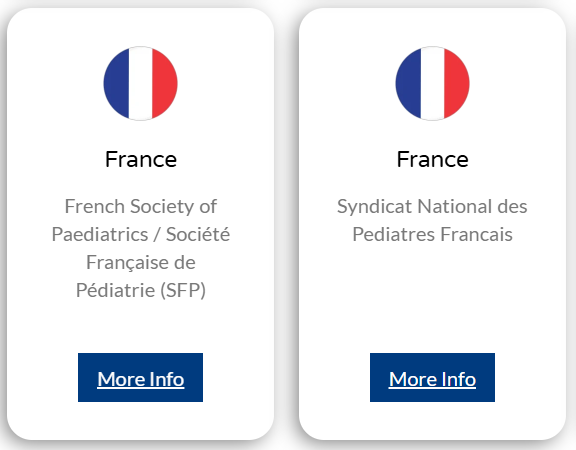
However, it is important to note (using the above society as an example) that the French Society of Paediatrics (Société Française de Pédiatrie, SFP) is not recognized by UEMS as the official national representative for paediatrics.
Instead, the Syndicat National des Pédiatres Français (French Paediatric Union) is the sole UEMS-recognized representative for France. This society pays membership to the UEMS and the representative nominated by this society will vote on all matters concerning EBP (for example: elections for president, endorsement of ETRs during the EBP General Assembly).
There are thus cases thus where the UEMS recognizes only one organization in the specific country. This may or may not be the case for you. You can verify through your national medical union or council which local societies are recognised.
To be officially added to the UEMS database as a National Delegate, the individual must obtain a formal letter of nomination from the UEMS-recognized society — in the case of France, the Syndicat National des Pédiatres Français.
In some instances, this may require the delegate to join the recognized society to secure the necessary nomination.
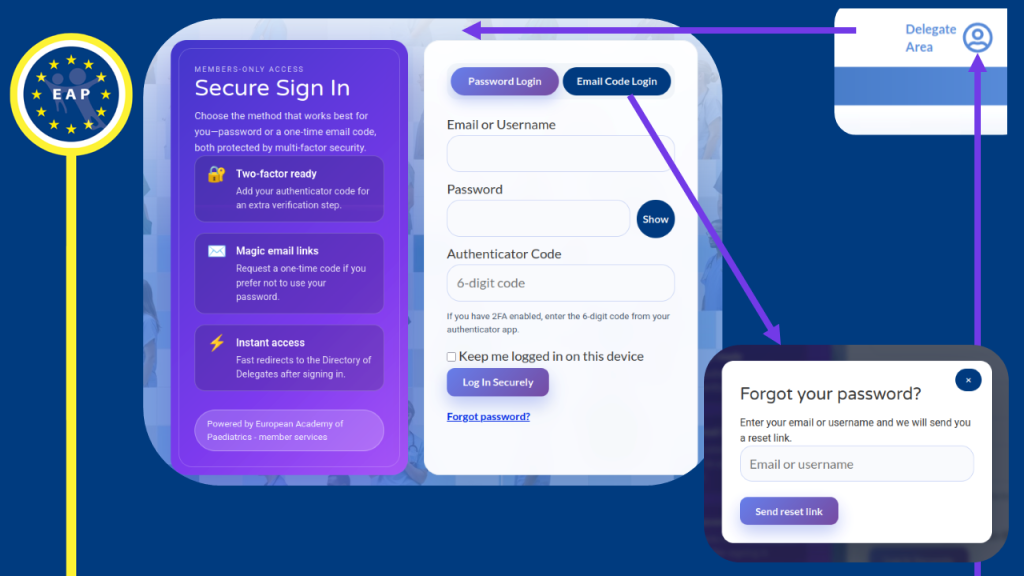
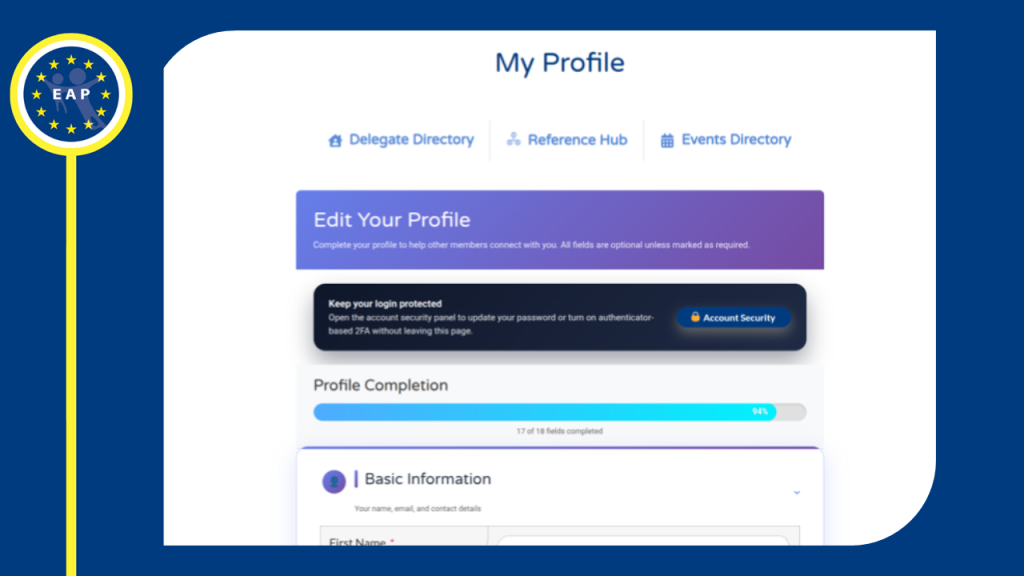
The Member Area is a central, secure space where official EAP national delegates and Young EAP Representatives can:
You will be able to set up your password once you have been officially registered on the platform by the EAP Secretariat. For UEMS countries, this does not require completion of the full UEMS registration process (i.e. the three-step process outlined above). As soon as the Secretariat is informed that you have been appointed as a National Delegate, your user account is created. At that point, you will automatically receive an email invitation to set up your password for the Member Area.
Once you have access, we ask you to:
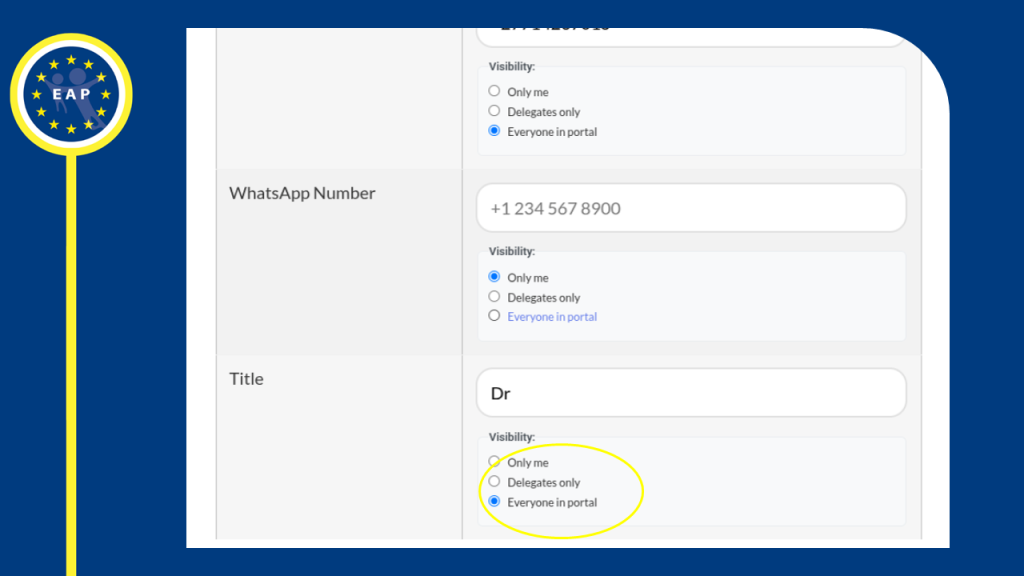
Keeping your personal details and visibility preferences up to date helps ensure that the delegate directory becomes a trusted and valuable networking tool for the entire EAP community.
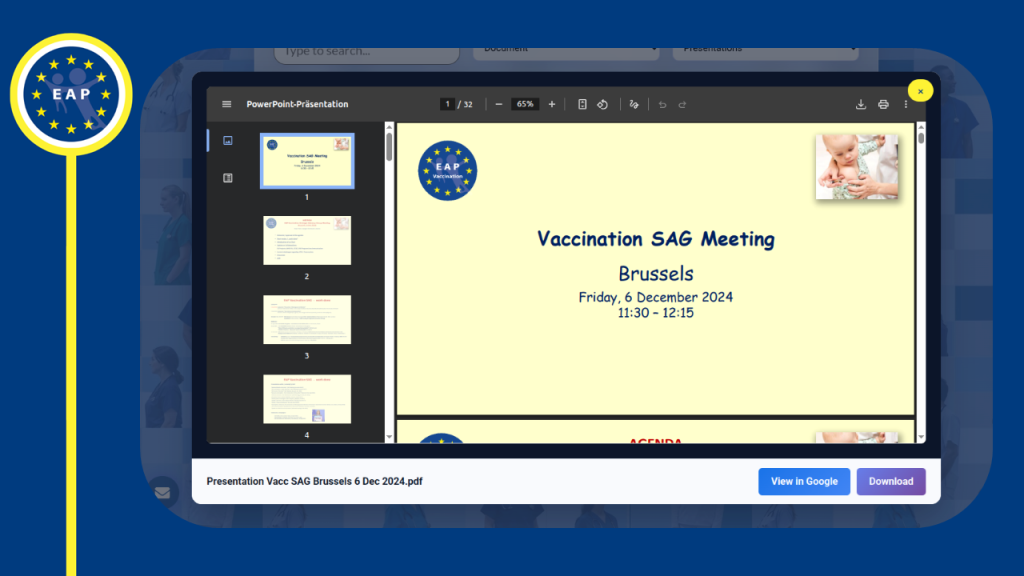
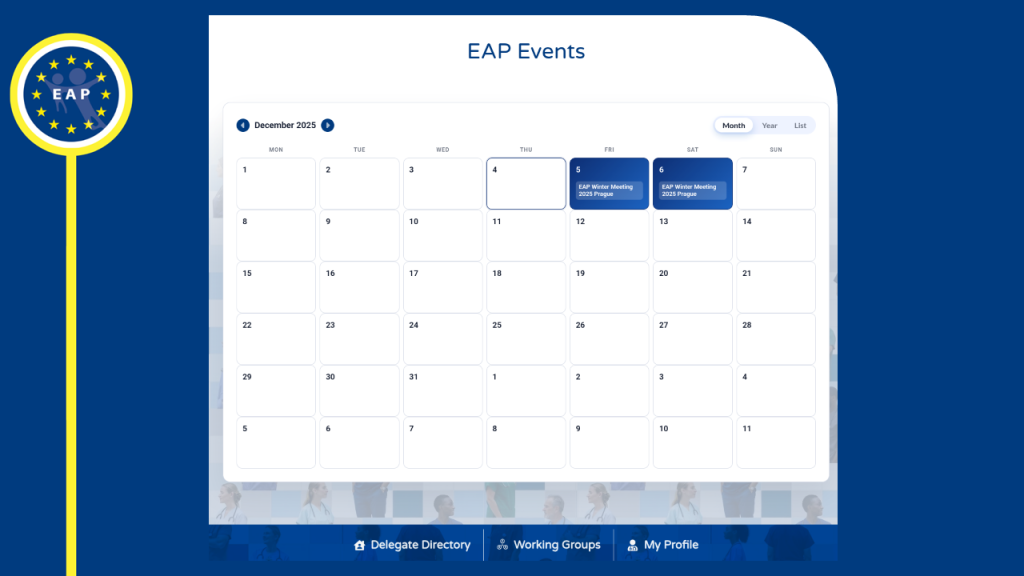
Voting takes place during the face-to-face meetings of the General Assembly and the European Board of Paediatrics session.
Body | Who Votes |
EAP General Assembly (GA) | Full Member Delegates & Chairs of Permanent Councils |
Executive Committee (EC) | EC Members vote internally for EC decisions (separate from GA) |
Permanent Councils | Registered Delegates and Fellows |
For a summary of the voting rules as per EAP’s regulations, click here.
For a summary of the voting rules as per UEMS regulations, click here.
Topic | Body Involved | Voting Method | Majority Required | Who Can Vote | Source |
Admission of Members | General Assembly | Show of hands, electronic, or secret ballot | Two-thirds | Full Members & Chairs of Permanent Councils | AoA Art. 9.2.3 |
Exclusion of Members | General Assembly | Show of hands, electronic, or secret ballot | Two-thirds | Full Members & Chairs of Permanent Councils | AoA Art. 10.3.3 |
Membership Fees | General Assembly | Show of hands, electronic, or secret ballot | Simple majority | Full Members & Chairs of Permanent Councils | AoA Art. 11.2 |
EAP Executive Committee Elections | General Assembly | Show of hands, electronic, or secret ballot (practice) | Simple majority | Full Members & Chairs of Permanent Councils | Governance practice |
Chair of Council Election | Council + GA Approval | Show of hands, electronic, or secret ballot | Simple majority | Delegates and Fellows in Council | RoP 6.5.1 |
Honorary/Corresponding/Young Fellow | General Assembly | Show of hands, electronic, or secret ballot | Approval required | Full Members & Chairs of Permanent Councils | RoP 5.1.2, 5.2.2, 5.3.2 |
Tertiary Care Council Decisions & ETRs (vote to recommend and ETR to the EBP Session) | Tertiary Care Council | Show of hands, electronic, or secret ballot (by practice) | Simple majority | Registered Delegates and Fellows | RoP 6.4.2, 6.5.1 |
ETR Final Approval during the EBP Session | EBP Session | Show of hands, electronic, or secret ballot (practice) | Majority | UEMS Full Members | UEMS Statutes practice |
Treasurer Elections | EBP Session | Show of hands, electronic, or secret ballot (practice) | Majority | UEMS Full Members | UEMS Statutes practice |
EBP Chair (Vice President and Ex-Officio, UEMS) | EBP Session | Show of hands, electronic, or secret ballot (practice) | Majority | UEMS Full Members | UEMS Statutes practice |
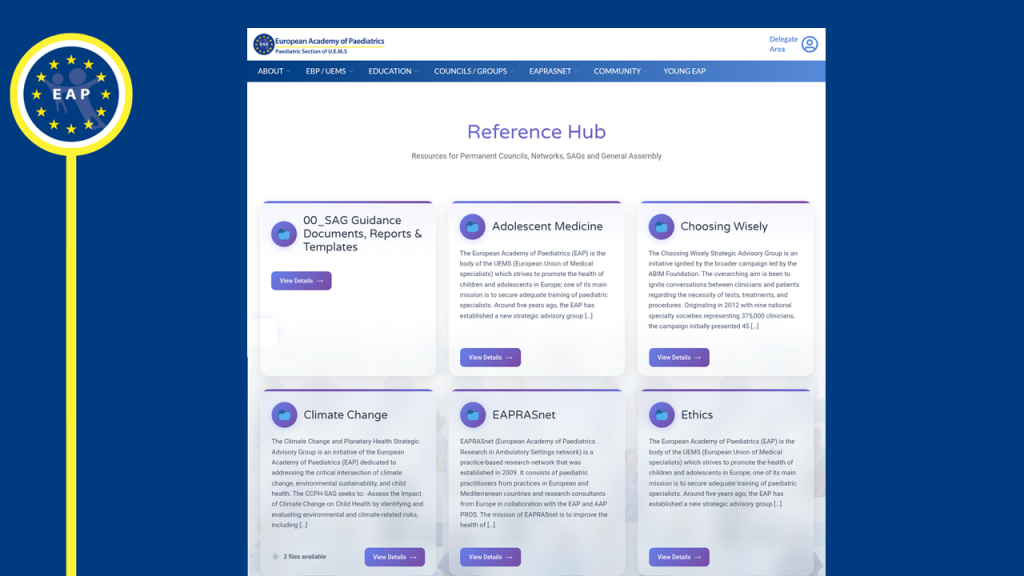
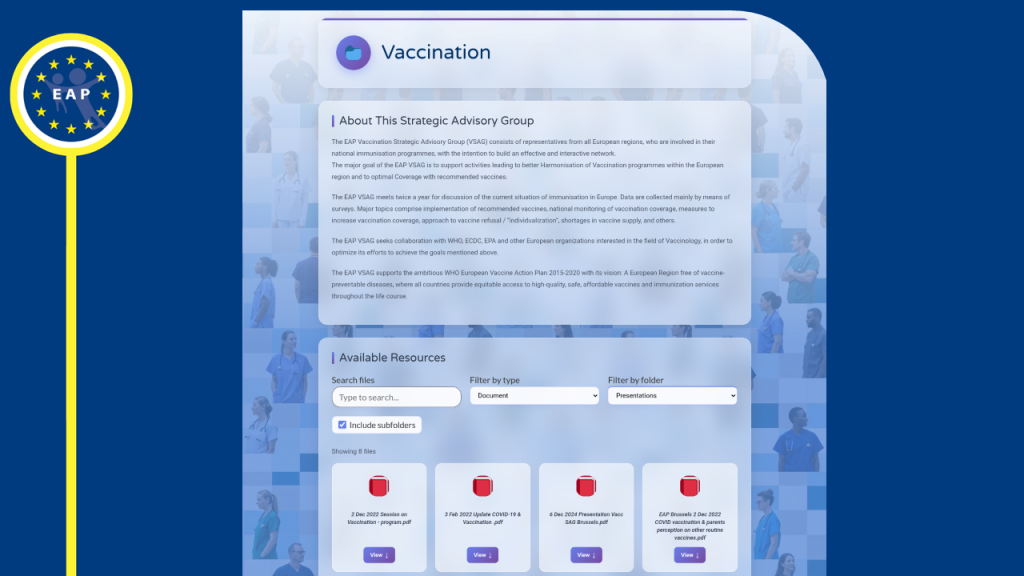
SAGs focus on specific areas of pediatric health and policy, define the joint position of European paediatrics and publish these in statements and position papers that are approved the the Executive Committee. Delegates are encouraged to join and contribute to these groups. They typically work through online meetings to faciliate acceess.
We encourage all new delegates to actively engage in EAP activities by:
Staying informed and engaged is crucial to making the most of your role as an EAP delegate.
Here are a few key updates and ways to stay connected:
Official announcements, meeting updates, and important policy discussions are primarily conducted via email. Make sure that you receive emails from our domain. The contacts are:
Follow EAP for the latest updates, news, and discussions:
Make sure that you are on the list! Sign up for the relevant news here now.
Read the e-news online here: https://www.eapaediatrics.eu/eap-newsletters/
EAP has established a broader WhatsApp Community, within which individual WhatsApp groups are organised (e.g. National Delegates, Young EAP, and selected Councils or working groups). This structure allows members to see which groups exist and request to join those relevant to them, while group administrators retain control over approvals.
You can join the community & closed National Delegate WhatsApp Group now using the link below:
Nothing can replace the value of meeting with the EAP Community in person. It is a valuable a platform for:
See all upcoming events here: https://www.eapaediatrics.eu/events/
Join us in Tiblisi, Georgia 30th April-3rd November 2026 for an interactive update on paediatric care. Abstract submisstions are open! https://eap-congress.org/abstracts/
Learn more here: EAP MasterCourse 2026
Contact: [email protected]
Mark your calendars for this new exciting event of the scientific European Paediatric Societies , showcasing the best of paediatrics across Europe. Details here: CEPAS 2026. Abstract Submissions are open!
Contact: [email protected].
EAP meetings are a key part of our work and take place throughout the year:
The next Spring Meeting is planned for: 15-16 May 2026 (there is currently a discussion to combine the Spring meeting and MasterCourse, outcome expected mid-December 2025); Winter Meeting: 4–5 December 2026;
These are the meetings where voting takes place and GA decisions are made.
We are committed to making these meetings interactive and engaging to foster collaboration and exchange among National Delegates and members.
Details of the previous academy here: https://www.eapaediatrics.eu/eap-leadership-academy-2025-leipzig-germany-25-27-september-2025/
Contact: [email protected].
Specific working groups may hold online meetings throughout the year to advance projects and policy discussions. If you have signed up to join an SAG, you will receive meeting invitations via email.
From the second quarter of 2025, we are be hosting a webinar every two months – free of charge and open to all! Keep an eye on our website for information on the 2026 webinar series.
Read more on our website today or contact Ebeth Wilson (Exam Coordinator) [email protected]
The preparatory CKP Course and EAP Learning are valuable opportunities that we welcome you to share in your network! If you need information on the CKP Course contact: Monique Kasselman at [email protected].
The European Academy of Paediatrics (EAP) is the UEMS Section of Paediatrics. In 2019, the two parties signed an MOU to collaborate on improving paediatric training standards, developing European Training Requirements (ETRs), and running joint examinations in paediatrics.
Both organisations maintain separate finances, but work together on educational content, examinations, and meetings (including joint Spring and Winter General Assemblies).
They share intellectual property and responsibilities for the EBP-EAP Exam and agree to co-brand relevant materials. The partnership aims to strengthen paediatric education and professional standards across Europe.
UEMS decided to collect membership fees of its bodies directly, into the UEMS bank account (Bank: BNP Paribas Fortis, Montagne du Parc 3, B-1000 Brussels, Belgium, Account name: AISBL UEMS / SECTION OF PAEDIATRICS, Account number: BE84001673149259, BIC code: GEBABEBB) effective from 1 March 2025 onwards (including past outstanding fees).
The letter from UEMS to EAP communicating this decision can be accessed here.
EAP will still collect fees from EAP full members who are not considered full members of the UEMS directly into EAP’s bank account (Belfius Bank NV, BE29068948770464, BIC: GKCCBEBB, Beneficiary: EUROPEAN ACADEMY OF PAEDIATRICS/UNION OF EURO AISBL)
In cases where two paediatric societies represent a single country, special arrangements may be made regarding membership fees and representation. Since UEMS (Union of European Medical Specialists) may recognize only one national organization for that specific country country — usually via a national medical council or union — only that recognized society’s delegate may formally represent the country at UEMS level, including in the European Board of Paediatrics (EBP).
To accommodate situations where a non-UEMS-recognized society is also active within the country, the following options may apply:
Regardless of the financial arrangement, EAP considers both societies’ delegates as Full Members with equal voting rights in all EAP General Assembly matters.
However, for EBP-related matters (such as European Training Requirements and curriculum development under UEMS auspices), only the delegate affiliated with the UEMS-recognized society may participate and vote (or nominate a proxy), in line with UEMS statutes.
ETRs are developed by subspecialty societies or working groups in line with UEMS standards, then reviewed and discussed within the EAP Secondary/Tertiary Care Council (STCC), where National Delegates provide feedback and vote on whether to recommend them.
Following STCC endorsement, the ETR is submitted to the European Board of Paediatrics (EBP) for formal approval, with voting limited to UEMS-recognised country delegates.
Once endorsed by the EBP, the ETR proceeds to UEMS for final consideration at European level.
The UEMS ETR endorsement process consists of the following formal steps:
As a National Delegate, you will receive access to EAP’s password-protected Delegate Area. This space provides internal documents such as Working Group files, SAG and Network materials, and meeting minutes.
Please note that all Delegate Area materials are confidential and must not be shared outside EAP unless they are officially published on the public EAP website or authorised for release.
You may update your Delegate Profile and choose who can see each field. For your privacy, all fields begin with the default setting “Only me.”
For full details on data protection, confidentiality, and use of the Delegate Area, please refer to EAP’s Terms of Use and Privacy Policy available on our website.
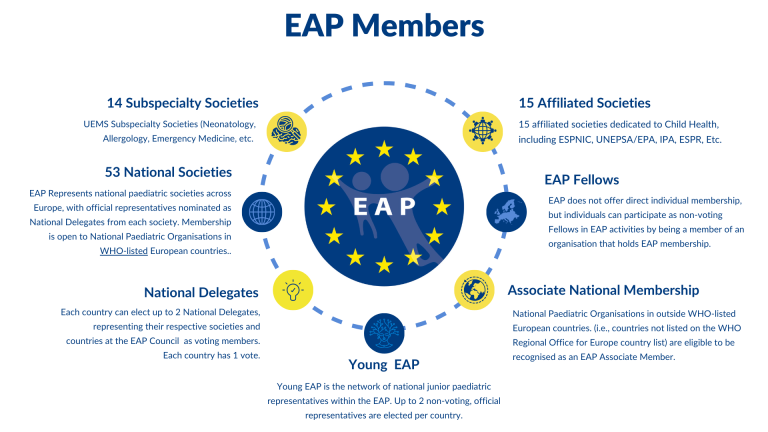
Information on EAP Membership Categories can be found here: https://www.eapaediatrics.eu/eap-members/
EAP does not offer direct individual membership, but individuals can participate in EAP activities by being a member of an organisation that holds EAP membership.
Depending on their affiliation, individuals gain specific titles within EAP:
EAP Member National Members, Subspecialty Societies and Affiliated/Related Societies
For: National Paediatric Organisations from countries listed on the WHO Regional Office for Europe list.
Each Full Member may appoint two nationally appointed delegates (“Full Member Delegates”). Delegates are encouraged to serve for a minimum of 4 years and a maximum of 12 years, but the final decision is left to the respective Full Member organisation.
Rights and Involvement:
For: National Paediatric Organisations in non-WHO-listed European countries.
Each Associate Member may appoint one or two delegates (“Associate Member Delegates”). Delegates are encouraged to serve for a minimum of 4 years and a maximum of 12 years, but the final decision is left to the respective Associate Member organisation.
Rights and Involvement:
For: European paediatric subspecialty societies recognized by UEMS.
Each Paediatric Subspecialty Member may appoint one delegate (“Paediatric Subspecialty Delegate”), who must be a resident of a country listed on the WHO Regional Office for Europe list. Delegates are encouraged to serve for a minimum of 4 years and a maximum of 12 years, but the final decision is left to the respective Subspecialty Member society.
Rights and Involvement:
For:
Each Affiliated and Related Society Member may appoint one delegate (“Affiliated and Related Society Delegate”), who must be a resident of a country listed on the WHO Regional Office for Europe list. Delegates are encouraged to serve for a minimum of 4 years and a maximum of 12 years, but the final decision is left to the respective society.
Rights and Involvement:
We are thrilled to have you on board as we continue to shape the future of paediatric healthcare in Europe. Your participation is vital, and we look forward to working together to advocate for child health and support the pediatric community.
For any questions or to get involved, feel free to reach out to us at [email protected].
Together, we empower paediatricians. Together, we shape the future of child health.
Last updated: March 2026

New ways to test high-risk medical devices.
Manufacturers of medical devices need to test their products before being allowed to market them. Specifically, they require clinical data showing their medical device is safe and efficient. In this context, the EU-funded CORE-MD project will translate expert scientific and clinical evidence on study designs for evaluating high-risk medical devices into advice for EU regulators. The project will propose how new trial designs can contribute and suggest ways to aggregate real-world data from medical device registries.
It will also conduct multidisciplinary workshops to propose a hierarchy of levels of evidence from clinical investigations, as well as educational and training objectives for all stakeholders, to build expertise in regulatory science in Europe. CORE–MD will translate expert scientific and clinical evidence on study designs for evaluating high-risk medical devices into advice for EU regulators, to achieve an appropriate balance between innovation, safety, and effectiveness. A unique collaboration between medical associations, regulatory agencies, notified bodies, academic institutions, patients’ groups, and health technology assessment agencies, will systematically review methodologies for the clinical investigation of high-risk medical devices, recommend how new trial designs can contribute, and advise on methods for aggregating real-world data from medical device registries with experience from clinical practice The consortium is led by the European Society of Cardiology and the European Federation of National Associations of Orthopaedics and Traumatology, and involves all 33 specialist medical associations that are members of the Biomedical Alliance in Europe.