New European Expert Statement on Paediatric Organ Donation
EAP Ethics SAG
New European Expert Statement on Paediatric Organ Donation
There is a balance to be struck around the regulation of medical devices between promoting innovation and availability, while ensuring safety and reliability.
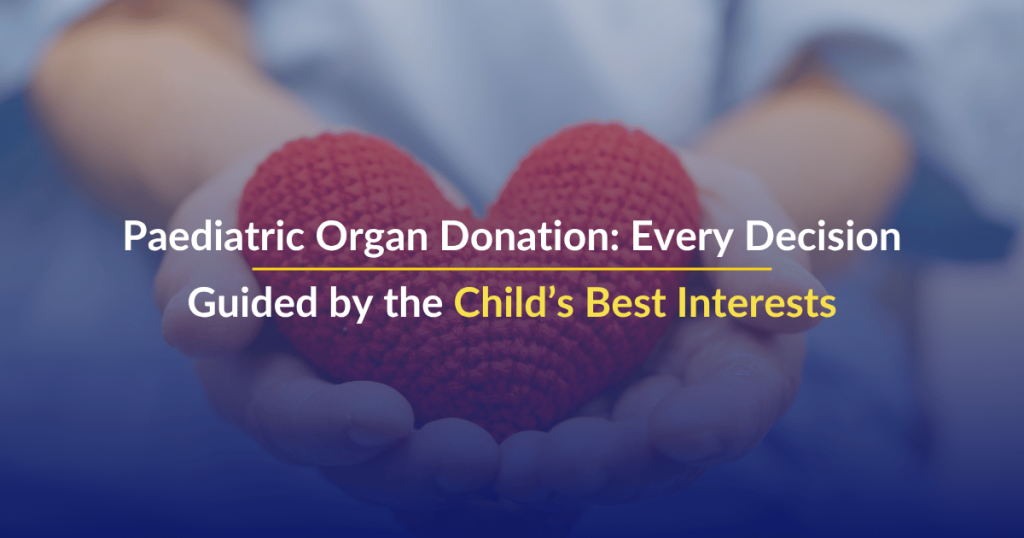
A new European expert statement brings renewed attention to one of the most sensitive areas of paediatric care: organ donation at the end of life.
Developed with the involvement of the EAP Ethics Special Interest Group alongside European partners, the paper focuses on how clinicians can support families through these moments with clarity, compassion, and honesty. It highlights the importance of early recognition of potential donors, close collaboration between ICU and donation teams, and thoughtful communication with parents.
The message is clear: decisions must always centre on the child’s best interests, with organ donation considered separately and without pressure. At the same time, families should be supported to understand all available options, including the possibility of donation, in a timely and sensitive way.
The statement also calls for greater consistency across Europe, recognising that missed opportunities for donation can have real consequences for other children waiting for life-saving transplants.
Optimising paediatric organ donation is a moral responsibility, requiring compassionate, family-centred care at every stage.
Coordinating Research and Evidence for Medical Devices (CORE-MD)
New ways to test high-risk medical devices.
Manufacturers of medical devices need to test their products before being allowed to market them. Specifically, they require clinical data showing their medical device is safe and efficient. In this context, the EU-funded CORE-MD project will translate expert scientific and clinical evidence on study designs for evaluating high-risk medical devices into advice for EU regulators. The project will propose how new trial designs can contribute and suggest ways to aggregate real-world data from medical device registries.
It will also conduct multidisciplinary workshops to propose a hierarchy of levels of evidence from clinical investigations, as well as educational and training objectives for all stakeholders, to build expertise in regulatory science in Europe. CORE–MD will translate expert scientific and clinical evidence on study designs for evaluating high-risk medical devices into advice for EU regulators, to achieve an appropriate balance between innovation, safety, and effectiveness. A unique collaboration between medical associations, regulatory agencies, notified bodies, academic institutions, patients’ groups, and health technology assessment agencies, will systematically review methodologies for the clinical investigation of high-risk medical devices, recommend how new trial designs can contribute, and advise on methods for aggregating real-world data from medical device registries with experience from clinical practice The consortium is led by the European Society of Cardiology and the European Federation of National Associations of Orthopaedics and Traumatology, and involves all 33 specialist medical associations that are members of the Biomedical Alliance in Europe.