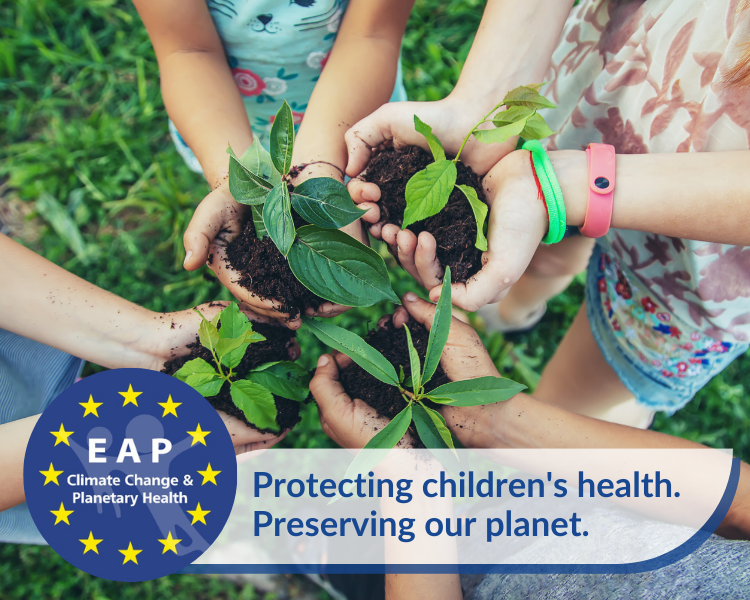
The Climate Change and Planetary Health Strategic Advisory Group is an initiative of the European Academy of Paediatrics (EAP) dedicated to addressing the critical intersection of climate change, environmental sustainability, and child health.
As the effects of climate change increasingly threaten children’s well-being, the SAG aims to provide strategic guidance, advocacy, and expertise to integrate planetary health considerations into paediatric practice, policy, and research.
The SAG conducts monthly online meetings and is actively engaged in a range of projects related to climate change and child health.
Leadership
Dirk Holzinger, Germany
Co-Chair
Senior Physician for Paediatric Rheumatology and Immunology at the Department of Paediatrics III, University Hospital Essen; Acting Professor for Paediatrics and Adolescent Medicine; MSc Public Health (Global Health).
Primary Care Paediatrician with the Italian National Health System in Rome; Medical Education Referent for the Italian Cultural Association of Paediatricians; President-Elect of the European Confederation for Primary Care Paediatricians.
Assess the Impact of Climate Change on Child Health – Identifying and evaluating environmental and climate-related risks, including air pollution, extreme weather events, food and water insecurity, and the spread of infectious diseases.
Develop Paediatric-Focused Climate and Planetary Health Strategies – Supporting policies and interventions that mitigate the health effects of climate change on children and future generations.
Promote Awareness and Education – Equipping healthcare professionals, policymakers, and the public with knowledge on how climate change and environmental degradation affect paediatric health, along with evidence-based solutions.
Advocate for Sustainable Healthcare Systems – Encouraging environmentally sustainable practices in paediatric healthcare and medical education.
Children’s Health and Climate Action: A Practical Guide for Families
Protecting Children’s in a Changing World
Children’s Health Needs Climate Action is a practical guide for parents and caregivers, created by the KlimaDocs editorial team in collaboration with the European Academy of Paediatrics (EAP). It shows how children’s health and planetary health are closely connected, and offers simple everyday actions that benefit both families and the environment.
The guide includes practical tips on food, transport, clean energy, reducing harmful substances, and protecting children during heat waves. It is designed to be accessible, reassuring, and useful, helping families take small but meaningful steps towards healthier children and a healthier planet.
To learn more about the work of KlimaDocs and their health-focused approach to climate action, visit the KlimaDocs website
(German, with option to use automatic translation).
Coordinating Research and Evidence for Medical Devices (CORE-MD)
New ways to test high-risk medical devices.
Manufacturers of medical devices need to test their products before being allowed to market them. Specifically, they require clinical data showing their medical device is safe and efficient. In this context, the EU-funded CORE-MD project will translate expert scientific and clinical evidence on study designs for evaluating high-risk medical devices into advice for EU regulators. The project will propose how new trial designs can contribute and suggest ways to aggregate real-world data from medical device registries.
It will also conduct multidisciplinary workshops to propose a hierarchy of levels of evidence from clinical investigations, as well as educational and training objectives for all stakeholders, to build expertise in regulatory science in Europe. CORE–MD will translate expert scientific and clinical evidence on study designs for evaluating high-risk medical devices into advice for EU regulators, to achieve an appropriate balance between innovation, safety, and effectiveness. A unique collaboration between medical associations, regulatory agencies, notified bodies, academic institutions, patients’ groups, and health technology assessment agencies, will systematically review methodologies for the clinical investigation of high-risk medical devices, recommend how new trial designs can contribute, and advise on methods for aggregating real-world data from medical device registries with experience from clinical practice The consortium is led by the European Society of Cardiology and the European Federation of National Associations of Orthopaedics and Traumatology, and involves all 33 specialist medical associations that are members of the Biomedical Alliance in Europe.