Explore the latest initiatives, surveys and global child-health activities from the International Pediatric Association (IPA).
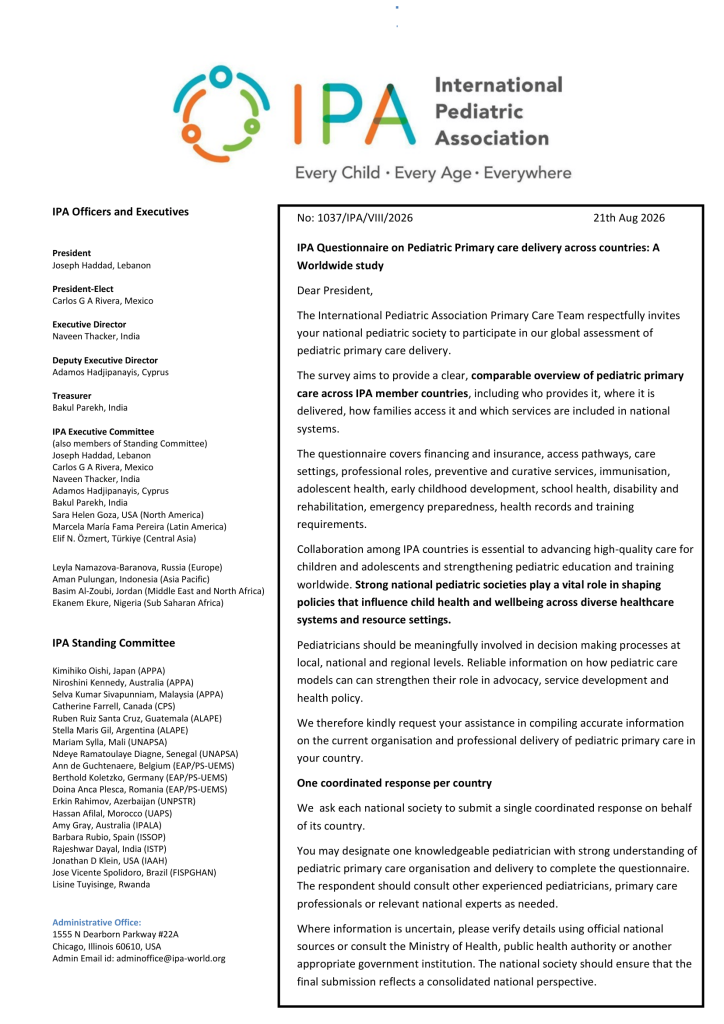
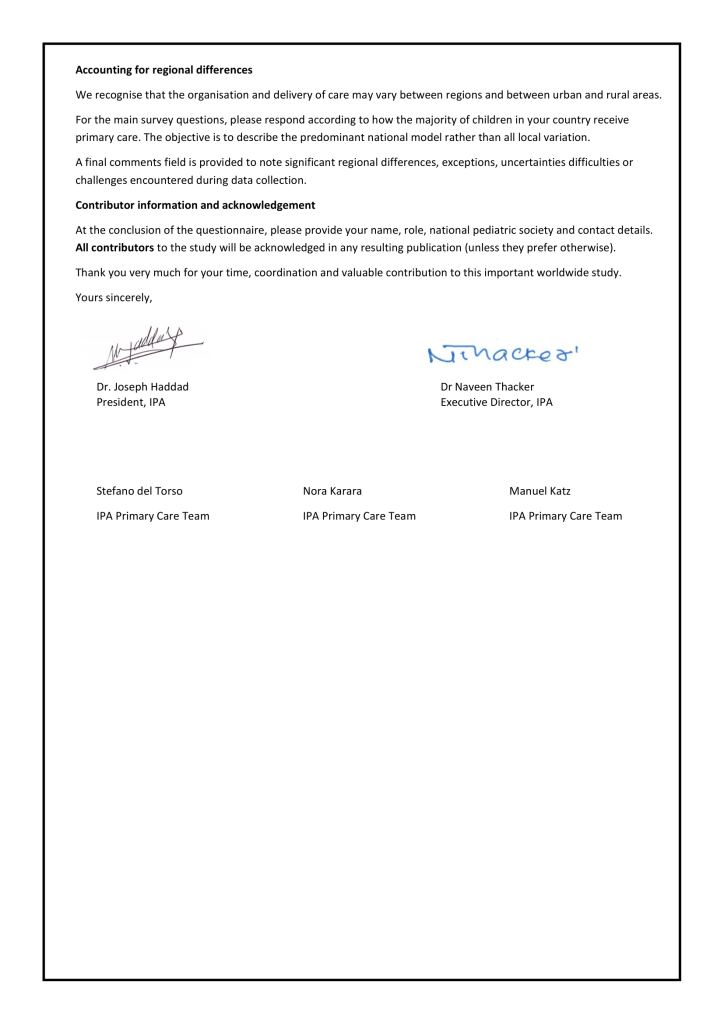
Global Survey: Paediatric Primary Care Delivery Across Countries
Global Survey: Paediatric Primary Care Delivery Across Countries
The IPA Pediatric Primary Care Worldwide (PPCWW) Survey opened on 1 September 2026 and is being shared with the Presidents of IPA National Member Societies. Led by the International Pediatric Association Primary Care Team, the survey aims to build a clear and comparable picture of paediatric primary care delivery across countries, including who provides care, where it is delivered, how families access services and which services are included within national systems.
Each national paediatric society is asked to submit one coordinated response on behalf of its country. A knowledgeable paediatrician may be designated to complete the questionnaire in consultation with other national experts where needed, with uncertain information verified through official national sources or relevant health authorities.
For further information or questions about participation, please contact the IPA Administrative Office at [email protected]
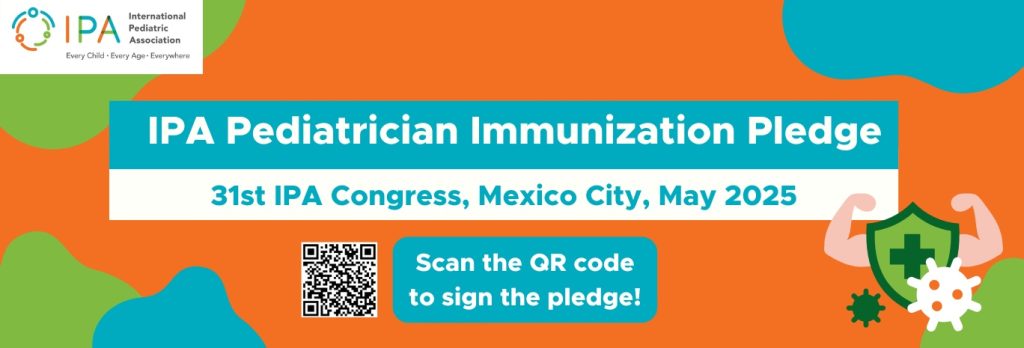
IPA Paediatrician Immunization Pledge
Join paediatricians around the world in supporting childhood immunisation.
The International Pediatric Association Paediatrician Immunization Pledge encourages paediatricians to reaffirm the importance of childhood immunisation and their role in protecting children and communities from vaccine-preventable disease.
Launched in connection with the 31st IPA Congress in Mexico City in May 2025, the initiative invites paediatricians to add their support to this global commitment to immunisation.
Coordinating Research and Evidence for Medical Devices (CORE-MD)
New ways to test high-risk medical devices.
Manufacturers of medical devices need to test their products before being allowed to market them. Specifically, they require clinical data showing their medical device is safe and efficient. In this context, the EU-funded CORE-MD project will translate expert scientific and clinical evidence on study designs for evaluating high-risk medical devices into advice for EU regulators. The project will propose how new trial designs can contribute and suggest ways to aggregate real-world data from medical device registries.
It will also conduct multidisciplinary workshops to propose a hierarchy of levels of evidence from clinical investigations, as well as educational and training objectives for all stakeholders, to build expertise in regulatory science in Europe. CORE–MD will translate expert scientific and clinical evidence on study designs for evaluating high-risk medical devices into advice for EU regulators, to achieve an appropriate balance between innovation, safety, and effectiveness. A unique collaboration between medical associations, regulatory agencies, notified bodies, academic institutions, patients’ groups, and health technology assessment agencies, will systematically review methodologies for the clinical investigation of high-risk medical devices, recommend how new trial designs can contribute, and advise on methods for aggregating real-world data from medical device registries with experience from clinical practice The consortium is led by the European Society of Cardiology and the European Federation of National Associations of Orthopaedics and Traumatology, and involves all 33 specialist medical associations that are members of the Biomedical Alliance in Europe.