White Paper Calls for Child Health to Become a Core EU Research Priority
July 21, 2026
Bringing Child Health Research to the European Parliament
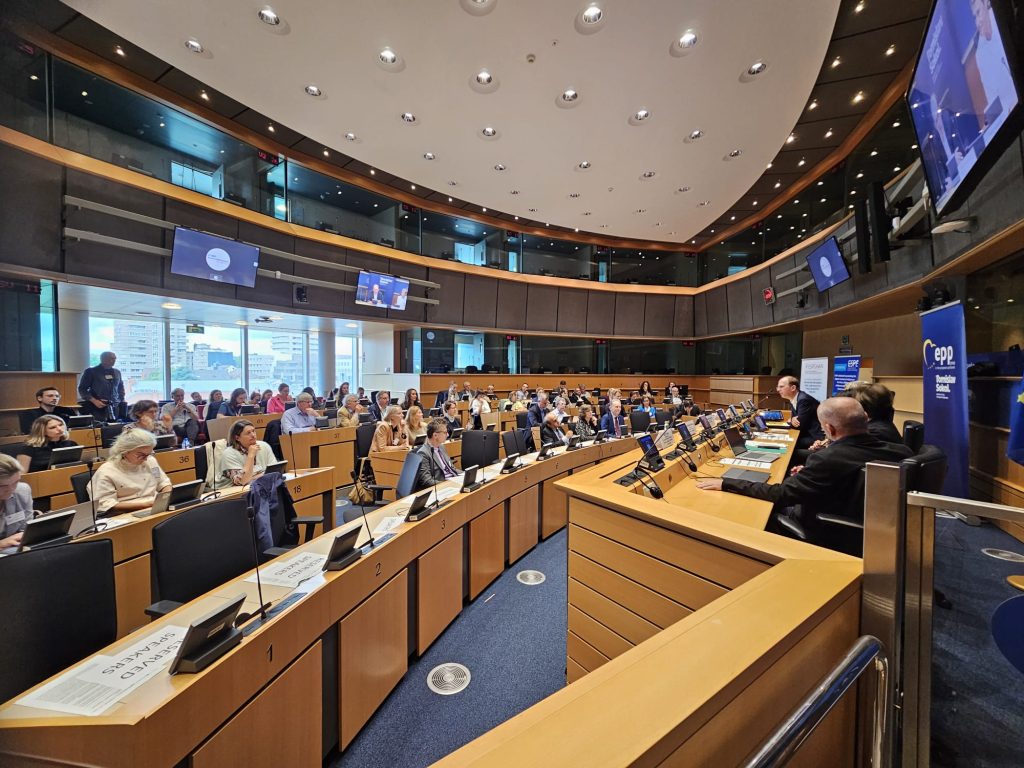
Following the European Parliament meeting on 4 June 2026, five leading European paediatric societies have published a joint White Paper calling for stronger investment in child health research, prevention and innovation.
Promoting Child Health through Research and Innovation: A Key Priority for Europe was developed by EAP together with the Association for European Paediatric and Congenital Cardiology, the European Society for Paediatric Endocrinology, the European Society for Paediatric Gastroenterology, Hepatology and Nutrition, and the European Society for Paediatric Research.
Its message is clear: Europe cannot achieve healthy ageing, resilient healthcare systems or sustainable economic growth without investing in health from the beginning of life.
Why greater investment is urgently needed
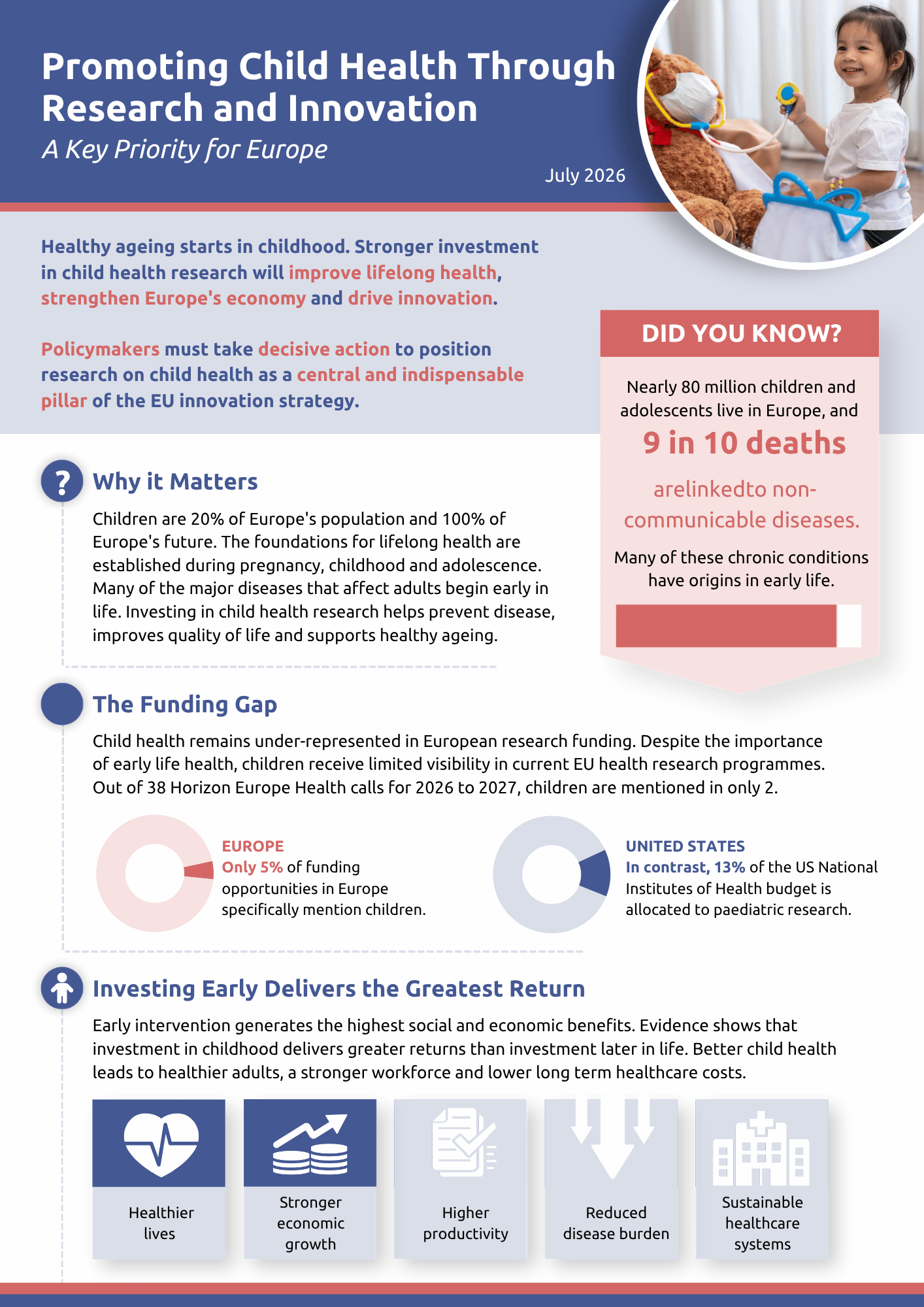
Children and adolescents represent almost one fifth of the EU population, approximately 80 million young people. However, they are explicitly included in only 2 of the 38 calls in the Horizon Europe Health Work Programme for 2026 and 2027.
For paediatricians, the consequences of this gap are familiar. Limited research can mean insufficient evidence for treating children, delayed access to medicines and fewer medical devices developed specifically for paediatric care. The White Paper notes that paediatric drug approvals may occur eight to ten years after approval for adults, while complex regulatory processes are also affecting the availability of paediatric and orphan medical devices.
A call for European action
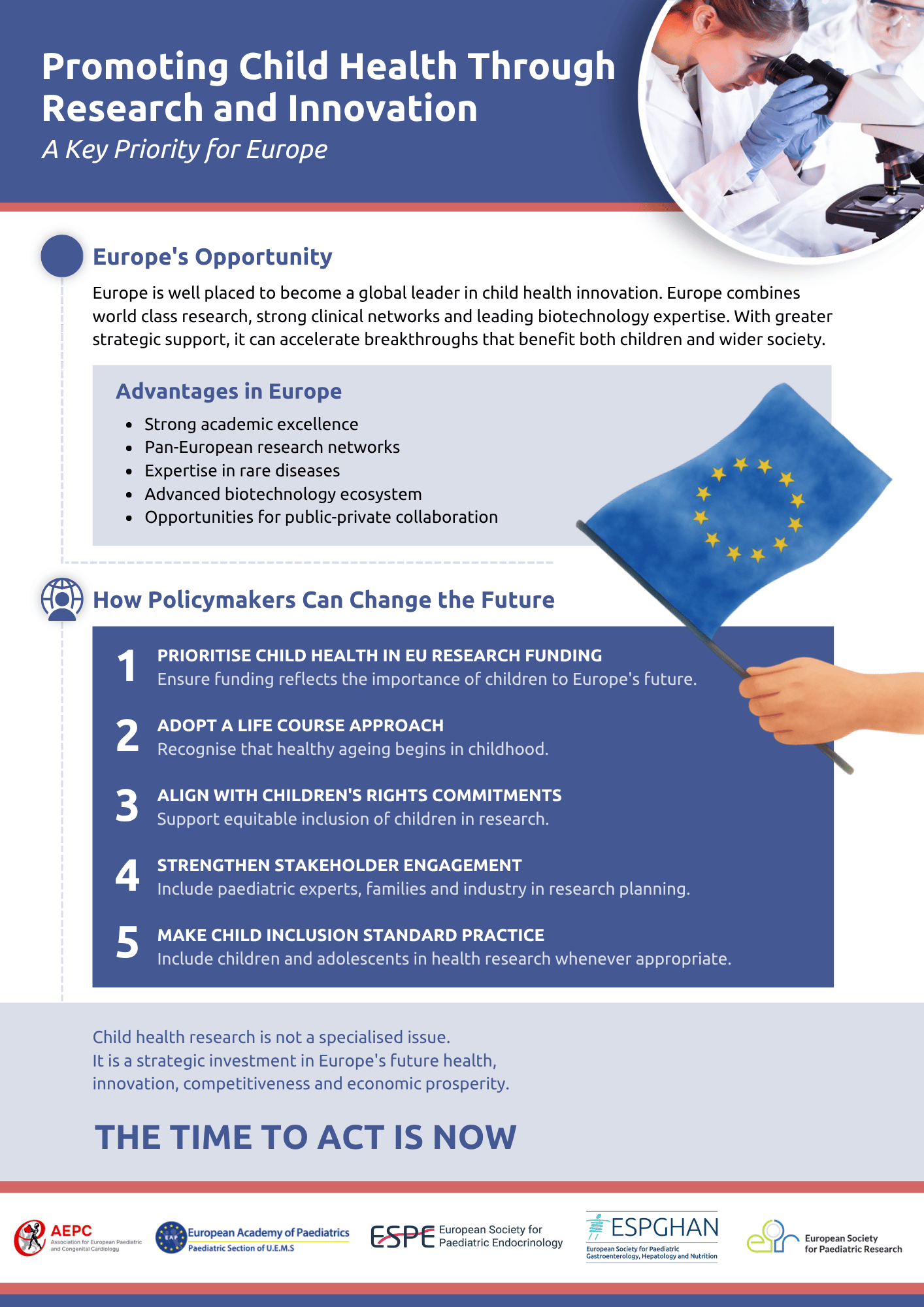
The White Paper urges EU policymakers to make child and adolescent health a central priority in future research programmes, including Horizon Europe 2028–2034.
It also calls for:
a life-course approach linking paediatric research with healthy ageing;
stronger involvement of paediatric societies, researchers, parent organisations and other stakeholders in setting EU research priorities;
the inclusion of children and adolescents in health research whenever appropriate and feasible;
better support for innovative medicines and medical devices for small paediatric patient populations.
Children’s health is not only a paediatric priority, it is a European priority.
Decisions made today about research, prevention, and innovation will shape the health and wellbeing of future generations.
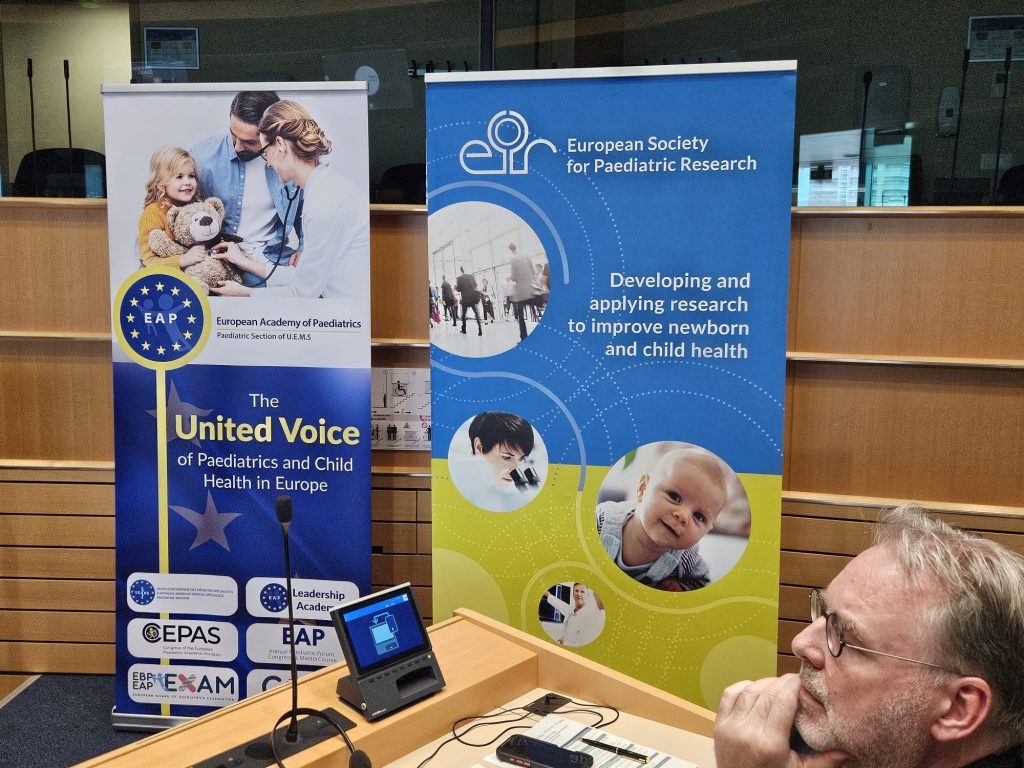
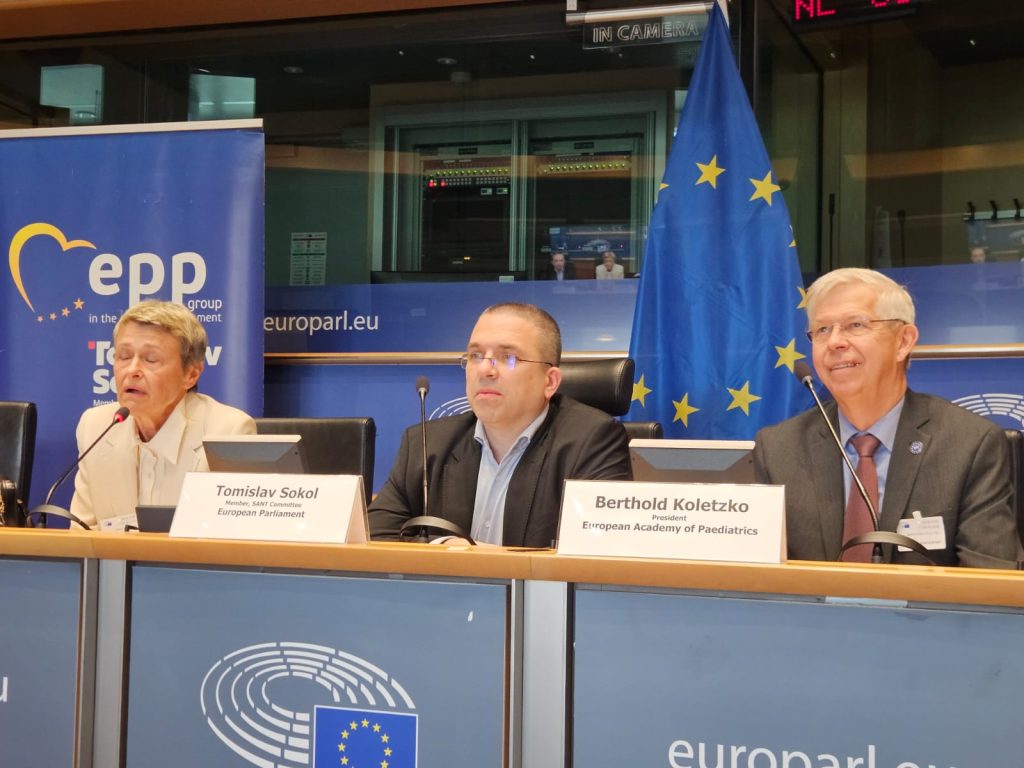
EAP was therefore pleased to be represented at an important meeting at the European Parliament, dedicated to strengthening the place of paediatric research and child health within future EU health and research policy.
Prof. Berthold Koletzko, Prof. Ann de Guchtenaere, Dr Iren Kantor, and Dr Nora Karara joined the discussion on behalf of EAP, bringing the voice and experience of Europe’s paediatric community to the table. Their contribution highlighted a central message: investing in children’s health is one of the most effective ways to promote lifelong health, prevent disease, and support a healthier future for Europe.
The meeting provided an important opportunity to underline the need for stronger European support for paediatric research, greater recognition of prevention in childhood and adolescence, and a clearer commitment to ensuring that children benefit from future medical advances and innovation.
Coordinating Research and Evidence for Medical Devices (CORE-MD)
New ways to test high-risk medical devices.
Manufacturers of medical devices need to test their products before being allowed to market them. Specifically, they require clinical data showing their medical device is safe and efficient. In this context, the EU-funded CORE-MD project will translate expert scientific and clinical evidence on study designs for evaluating high-risk medical devices into advice for EU regulators. The project will propose how new trial designs can contribute and suggest ways to aggregate real-world data from medical device registries.
It will also conduct multidisciplinary workshops to propose a hierarchy of levels of evidence from clinical investigations, as well as educational and training objectives for all stakeholders, to build expertise in regulatory science in Europe. CORE–MD will translate expert scientific and clinical evidence on study designs for evaluating high-risk medical devices into advice for EU regulators, to achieve an appropriate balance between innovation, safety, and effectiveness. A unique collaboration between medical associations, regulatory agencies, notified bodies, academic institutions, patients’ groups, and health technology assessment agencies, will systematically review methodologies for the clinical investigation of high-risk medical devices, recommend how new trial designs can contribute, and advise on methods for aggregating real-world data from medical device registries with experience from clinical practice The consortium is led by the European Society of Cardiology and the European Federation of National Associations of Orthopaedics and Traumatology, and involves all 33 specialist medical associations that are members of the Biomedical Alliance in Europe.